

Why AI is driving up your bills
The technology is causing price spikes, but some believe change is coming
Daily Telegraph page 19 referencing added.
James Titcomb Technology Editor
26 December 2025
1
- In as little as a decade, artificial intelligence could eliminate the need for money, at least if you ask Elon Musk.
- “Money will stop being relevant,” Musk told a technology conference in November.
- The billionaire predicted a post-scarcity world similar to that depicted in the sci-fi author Iain M Banks’s Culture Series, in which jobs are optional and superintelligent beings have solved every material desire.
- It is a common prediction among the AI elite. OpenAI’s Sam Altman has claimed that the technology will lead the price of goods to “fall dramatically”, while Google DeepMind’s Demis Hassabis has envisaged a world of “radical abundance”.
- It will take several years to judge whether there is any truth to those wildly optimistic predictions. But for now, the AI boom has proven the opposite.
- As spending on data centres, semiconductors and AI has soared, so too have complaints around the cost of living, with
- Nowhere is this likely to be felt more acutely than when buying a new laptop next year.
- In as little as a decade, artificial intelligence could eliminate the need for money, at least if you ask Elon Musk.
- “Money will stop being relevant,” Musk told a technology conference in November.
- The billionaire predicted a post-scarcity world similar to that depicted in the sci-fi author Iain M Banks’s Culture Series, in which jobs are optional and superintelligent beings have solved every material desire.
- It is a common prediction among the AI elite. OpenAI’s Sam Altman has claimed that the technology will lead the price of goods to “fall dramatically”, while Google DeepMind’s Demis Hassabis has envisaged a world of “radical abundance”.
- Modern data centres are kitted out with huge racks of servers containing dedicated AI processors produced by companies such as Nvidia, AMD and Google.
- They are accompanied by massive quantities of memory – where data is kept while it is accessed by the AI chips.
- Soaring demand for these memory chips has led prices to spike.
- Industry analyst TrendForce says memory prices have risen more than fivefold over the last year, hugely increasing costs for electronics manufacturers.
- Memory accounts for as much as 20pc of the cost of a laptop, and up to double that for an Xbox.
- TrendForce is expecting price rises as a result. It has said laptop prices could rise by 15pc, and that console makers may have to follow. The console market is forecast to shrink by 4.4pc next year as a result.
- Raspberry Pi, the British company that makes small computers beloved by hobbyists, said earlier in December that it was increasing prices by up to 20pc, blaming “competition from the AI infrastructure rollout”.
- The memory price spike could also lead to the bizarre situation in which next year’s phones and laptops are less powerful than 2025s.
- TrendForce says that while most entry-level smartphones this year have eight gigabytes of random access memory, the norm is likely to be four gigabytes in 2026, meaning apps will run more slowly and take longer to load. The same is likely to happen to laptops.
- TrendForce’s Avril Wu says prices are unlikely to come down any time soon.
- “This represents a structural shift in market demand, and [we] therefore expect the current memory upcycle to persist over the medium to long term, rather than being a short-lived phenomenon,” she says.
- Not everyone demands cutting-edge gadgets and console makers. But almost everyone is susceptible to rising energy bills as a result of AI’s almost-insatiable hunger for power.
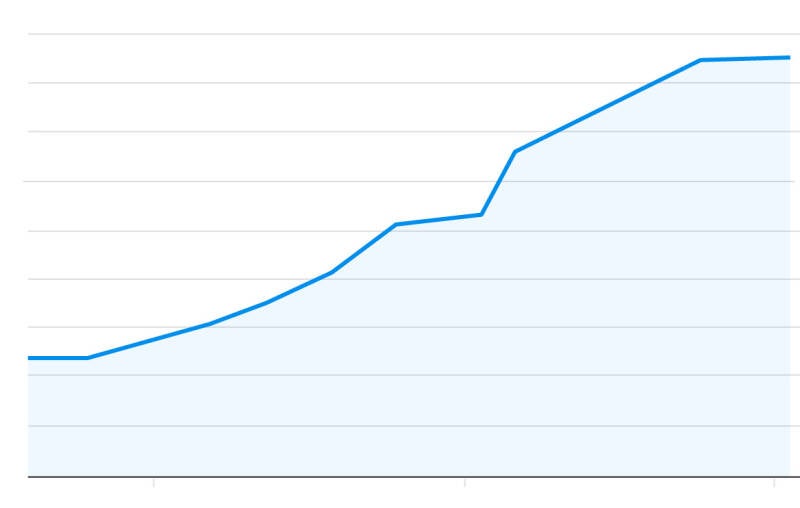
- The International Energy Agency predicts that data centre electricity demand will double by 2030, at which point it will account for more consumption than the whole of Japan.
- In the US, McKinsey estimates that data centres could use 12pc of electricity supplies, while British regulators estimate it could be 7pc in the UK. In Ireland, data centres already account for more than a fifth of consumption.
- Surging demand has been blamed for rising energy costs.
------------------------------------------------------------
Energy demand from data centres set to soar
Projected UK data centre electricity consumption, by year
Terawatt-hours
45
40
35
30
25
20
15
2025 2030 2035
2
- Residential electricity prices in New Jersey, one of America’s data centre hubs, have jumped by 34pc in the last year. Prices have also shot up in Virginia, home to the biggest concentration of data centres in the world.
- In both states, Democratic candidates enjoyed wide margins of victory in elections for governor in November.
- Mikie Sherrill, the New Jersey candidate, promised a state of emergency to freeze prices, while Virginia’s Abigail Spanberger promised to make data centres “pay their own way”.
- One climate group declared that “electricity costs are the new eggs”, referring to the observation that high grocery prices helped Donald Trump to victory in 2024.
- The Trump administration is paying attention. David Sacks, Trump’s AI tsar, said in November that: “The goal is rapid infrastructure build-out without increasing residential rates for electricity.”
- In Britain, where the data centre revolution is behind America, the impact on energy bills is yet to be directly felt. However, the costs of upgrading the energy grid, in part to allow more data centres, are already landing on household bills.
- Protests could be just around the corner. The UK’s National Energy System Operator estimates that data centres could account for 7pc of electricity demand by 2030, with demand tripling from today.
- Massive spending on AI could also be keeping interest rates high, increasing the costs of business loans and mortgages.
- “The rapid and insatiable demand for extra capital may also push up real interest rates, as it did in the internet boom,” economists at Deutsche Bank said in November, referring to the 1990s dotcom bubble, when central bank rates rose above 6pc.
- The International Monetary Fund has estimated that the AI boom could push interest rates up by as much as 0.7 percentage points, due to growing demand for capital and higher expected returns.
- And many people are finding themselves paying for AI even when they have not asked for it.
- Microsoft raised subscription prices for its office productivity apps in recent months, justifying the move by pointing to AI features it was including as part of the deal.
- In October, Australia’s Competition and Consumer Commission sued Microsoft, claiming it had misled customers by making it difficult for customers to find cheaper alternatives without AI.
- Microsoft has apologised and offered refunds to customers.
- However, other companies from Google to Adobe have raised subscription prices at the same time as including new AI features.
- Sceptics say forcing the technology on users allows companies to claim widespread usage of the tools, even if adoption among businesses and consumers is lacklustre.
- AI’s proponents believe it could lead to unimaginable riches in a few years. In the meantime, we are the ones paying for it.
source